

Let’s Talk about São Paulo
You know, Rio & Learn might be a school based in Rio de Janeiro, but that doesn’t mean we cannot appreciate the whole country. Yes, yes, I know. São Paulo is a bit of a controversial subject amongst us cariocas, just like Rio is a touchy topic for paulistas too. But we can put that rivalry aside to talk about our neighbor’s history. And how would you like to know some fun things to do in São Paulo as well? Check this out!
Contents
Origin and History
São Paulo’s history starts at the beginning of the 16th century. One of the very first villages to be founded in the state was Santo André da Borda do Campo. That village, however, was constantly under the threat of indigenous people of the region.
Around the same time, a group of Jesuit priests from the Society of Jesus climbed the Serra do Mar and arrived at the Piratininga plateau. There they felt at home. The fresh and tempered air reminded them of Spain. They had plenty of fertile land and two rivers crossed the plateau. The location was simply perfect. And so that’s where the city of São Paulo began to take its shape.
The official celebratory date of the founding of São Paulo is January 25th 1554. That was when the first mass was held at a school built by the Jesuits. In 1560, the village was granted its first rights as a town. However, being so far from the coast and isolated in terms of trade routes, the town was disregarded for decades. Yet in 1681 it was recognized as an important part of the Captaincy of São Paulo and in 1711 the town was promoted to the category of city.
Coffee Industry and Immigration
In 1727 coffee came to Brazil. Originally cultivated in Belém, it arrived in Rio de Janeiro and then expanded to São Paulo. In the state of São Paulo, the coffee industry consolidated its position as one of Brazil’s main exports, from the 19th century to the first decades of the 20th century. Due to the growing demand and increased coffee production, the city also began to grow.
The coffee industry was responsible for the first railways in São Paulo. It also brought around 4 million immigrants from Europe (particularly Italians, Germans and Greeks) and a great number of Japanese, Arab, Chinese and Korean people. By the time the coffee industry had begun to lose power, the city was already full of immigrants and had branched out into producing many other things.
São Paulo’s City Hall has developed an itinerary that allows you to understand the social, economical and cultural changes that the money from the coffee brought to the city. These are some of the places included in this itinerary:
- Palace of Justice (Palácio da Justiça)
- Guinle Building
- Bank of Brazil Cultural Center (Centro Cultural Banco do Brasil)
- Luz Station (Estação da Luz)
- Pinacoteca

Fun Facts about São Paulo
- São Paulo is the largest city in Brazil (and one of the largest in the world!) with over 12 million inhabitants
- São Paulo houses the largest Japanese community outside of Japan
- The city has two nicknames: Sampa (abbreviation of São Paulo) and Terra da Garoa (the land of drizzle).
- To reduce traffic congestion and decrease pollution, the city has implemented a system of road space rationing, based on the vehicle registration plates.
- If you were born in the city of São Paulo, you are paulistano, whereas paulistas are those born in the state of São Paulo. It works just like in Rio de Janeiro, where carioca da gema is a term used only for people born in the city of Rio, not the entire state.
- The Formula 1 driver Ayrton Senna is from São Paulo.
- Paulistas refer to cookies as bolachas while in Rio we say biscoito – and this is serious stuff here!
São Paulo Fast Facts
- Population and metropolitan scale: The city has over 12 million people, while the metropolitan area exceeds 21 million, making it one of the largest urban areas on the planet.
- Altitude and geography: São Paulo sits about 760 meters (2,493 ft) above sea level, which helps keep temperatures milder than in many Brazilian cities.
- Multicultural reality: It is one of the most multicultural cities in the world, home to the largest Japanese community outside Japan and the largest Italian community outside Italy. São Paulo has more than 360,000 immigrants living legally in the city.
- City flag vs state flag: São Paulo city and São Paulo state have different flags — a detail that often confuses visitors with the flag of the state of São Paulo, initially conceived as a proposed flag for the newly proclaimed republic.

Where Is São Paulo? Map, Location, and Region
São Paulo is located in Southeastern Brazil, the most developed region of the country, and plays a central role in Brazil’s economy and culture.
São Paulo City vs São Paulo State
The city of São Paulo was founded back when Brazil still had the captaincies system, established during the early Portuguese colonization period called the Treaty of Tordesillas. At the time, São Paulo was part of the São Vicente Captaincy, and later, when Brazilian states were created, the state of São Paulo inherited the city’s name.
Context usually makes the meaning clear in conversation, but people often refer to the city of São Paulo as “São Paulo Capital”.
Is São Paulo Close to Rio de Janeiro?
Yes. São Paulo and Rio de Janeiro are about 430 km (267 miles) apart. One hour by plane and about 6 hours by car or bus.
The two cities are connected by Via Dutra (BR-116), the main highway linking Rio de Janeiro and São Paulo. It is one of the most important roads in Brazil and is heavily used by cars, buses, and trucks every day. For travelers, this means frequent bus departures, good road infrastructure, and relatively easy logistics if you prefer traveling by land.
Despite it being a considerable distance, many travelers visit both cities on the same trip to make the most of their stay in Brazil.
São Paulo on the Map of Brazil
São Paulo borders Rio de Janeiro, Minas Gerais, and Paraná, making it a strategic center for travel, business, and culture.

What Time Is It in São Paulo? Time Zone Explained
São Paulo Time Zone
São Paulo follows Brasília Time (BRT), so it’s UTC −3, and there is no daylight saving time, like the rest of the country.
If you’re learning Portuguese or planning to schedule calls, classes, or meetings in Brazil, it’s also useful to know how Brazilians talk about time in everyday situations.
Time Difference with the US and Europe
| New York: São Paulo is usually 2 hours ahead (1 in DST) | 12:00 in São Paulo is 10:00 in New York |
| California: São Paulo is usually 5 hours ahead (4 in DST) | 12:00 in São Paulo is 7:00 in LA |
| London: São Paulo is 3 hours behind (2 in EST) | 12:00 in São Paulo is 15:00 in London |
| Central Europe: 4 hours behind (3 in EST) | 12:00 in São Paulo is 16:00 in Paris |
São Paulo’s Size and Population
How Big Is São Paulo City?
São Paulo is one of the world’s largest cities in terms of population with over 11.4 million people (2022 Census). It’s larger than New York and most European capitals, and is among the 5 most populous cities on the planet. With 1,521 km², it is also the third largest city in Latin America.
São Paulo Metropolitan Area Explained
The metropolitan region includes dozens of connected cities. Many residents commute daily, creating a massive, interconnected urban system; many consider these regions to be essentially natural extensions of the city.
Considering the metropolitan region, São Paulo would have around 21,700,000 inhabitants and 7,947 km².
Is São Paulo the Biggest City in Brazil?
Yes. São Paulo is the largest city in Brazil when it comes to population and total urban area.
How Do You Pronounce São Paulo? Meaning and Translation
How to Pronounce São Paulo
São Paulo  |
/sˈə̃w p’aw.lʊ/ |
The “ão” sound is nasal and doesn’t exist in English, which leads to common mistakes. Pronouncing “sao” as if it were “sal” – salt.
This nasal sound is marked by the tilde ( ˜ ), one of the most important accents in Portuguese and understanding how it works will make words like São, pão, and não much easier to pronounce correctly.
What Does São Paulo Mean?
São Paulo is the name of the Christian apostle “Saint Paul”. The date chosen for the Catholic mass that would mark the beginning of the construction of the Jesuit priests’ college on the Piratininga plateau was January 25th, precisely for religious reasons.
This is the day that commemorates the conversion of the Apostle Paul of Tarsus to Christianity. And it is every January 25th that the Roman Catholic Church honors the Apostle Paul (who was later called Saint Paul by the church and is also the patron saint of the city of Rome, Italy), according to the official Vatican website.
Since the date of the mass was chosen in honor of Saint Paul and it became the initial landmark of the city’s founding, the new village received the saint’s name, initially as Vila São Paulo de Piratininga and later, simply São Paulo.
Arriving in São Paulo: Airports, Flights, and First Steps
São Paulo has two main airports that connect the city to Brazil and the world. The GRU Airport (Guarulhos) and the CGH Airport (Cogonhas).
GRU vs CGH – Which Airport Will You Use?
If you are flying domestically (within Brazil) and staying in the main city area, CGH is usually the winner.
- Location: Inside the city (approx. 10 km from the center).
- Best for: Business travelers or tourists going to Paulista Ave, Itaim Bibi, or Moema.
- Vibe: Faster to exit, smaller terminal, and much closer to the action.
- Con: It only serves domestic flights.
GRU is the massive international hub. If you are coming from abroad, you will almost certainly land here.
- Location: In the neighboring city of Guarulhos (approx. 26 km from the center).
- Best for: International arrivals, long-haul connections, or if you find a significantly cheaper domestic ticket.
- Vibe: Huge, modern (especially Terminal 3), and full of VIP lounges and duty-free shops.
- Con: Traffic to the city center can be brutal. A taxi during rush hour can take 1.5 to 2 hours.
From the Airport to the City
The distance between Guarulhos Airport and downtown São Paulo is 26 km, and the distance between Congonhas Airport and downtown is more or less 10km. So both of them are relatively close to the center of the city.
Travel time varies, but without traffic, it takes from 15 to 30 minutes depending on the airport. Ride apps like Uber or 99 are common. You may also use inDrive, even though it’s less common.
What to Do in São Paulo (Top Experiences)
From parks and museums to food markets and nightlife, São Paulo offers endless experiences.
Parks and Outdoor Spaces

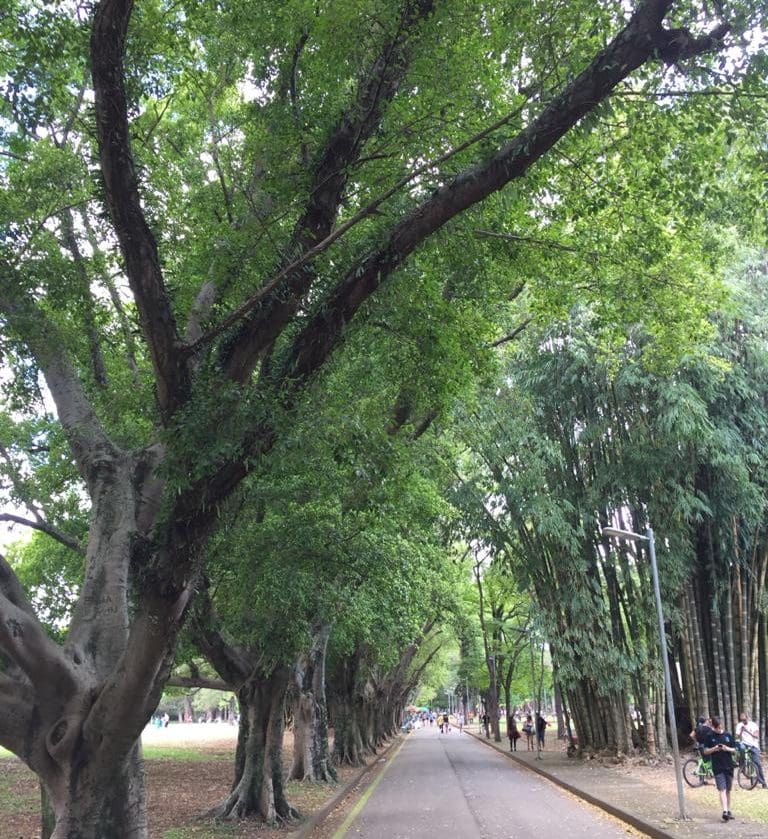
Ibirapuera Park – São Paulo’s most famous park is a true urban oasis in the middle of the city, offering vast green spaces, lakes, walking and biking paths, and a lively cultural scene. It is home to important museums and cultural institutions, such as the Museum of Modern Art (MAM) and the Afro Brazil Museum, and regularly hosts concerts, exhibitions, and open-air events. Ibirapuera Park is enormous, covering approximately 1.58 million square meters, making it a favorite spot for locals to relax, exercise, and escape the city’s fast pace.
Markets and Street Life

The Municipal Market (Mercadão) is a vibrant and bustling place that captivates locals and visitors alike with its impressive architecture and dazzling array of products. Located in the heart of the city, the market is known for its stalls overflowing with spices, seasonings, cured meats, cheeses, wines, meats, fish, and a myriad of colorful ingredients that make the environment a true feast for the eyes.
While exotic fruits stand out among the vibrant colors, the experience at the São Paulo Municipal Market goes far beyond that, offering the opportunity to sample traditional delicacies such as mortadella sandwiches, giant pastries, and cod fritters.
Furthermore, it’s a place where you can admire the beautiful architecture and explore a variety of imported ingredients and products, an unmissable experience for lovers of local cuisine and culture.
Rua 25 de Março offer a lively look into daily life and commerce, Rua 25 de Março is a public street located in the Mercado neighborhood, in the central region of the city of São Paulo, capital of the Brazilian state of São Paulo, considered the largest commercial center in Latin America, as it is one of the busiest retail and wholesale shopping centers in the city. One of the busiest shopping streets in the world — chaotic, energetic, and unforgettable.
This is exactly the kind of place that could easily become one of our RioLIVE! experiences: real Portuguese in action, bargaining vocabulary, street interactions, cultural shock moments, and authentic city energy.
Art, Culture, and Urban Experiences

(Batman Alley) is a side street located in Vila Madalena, a bohemian neighborhood in the western part of São Paulo, situated in the Pinheiros district. It’s located between the neighborhood’s alleyways, more precisely on Gonçalo Afonso and Medeiros de Albuquerque streets, near the Clínicas metro station. It can also be accessed via Harmonia Street and Alonso Alley. It features a dense concentration of graffiti covering the alley’s streets. There is also graffiti on nearby streets.

The area received its name due to a graffiti of the eponymous DC Comics character found on the neighborhood walls in 1980. Since then, visual artists have covered the alley with art influenced by Cubism and psychedelia, transforming it into a gallery. The place has become a tourist attraction due to the dozens of graffiti painted on its walls; currently, it even offers guided tours.
São Paulo is often called the “City of Drizzle” (Terra da Garoa), but its cultural vibe is anything but grey. If Rio is Brazil’s “sun and beach,” São Paulo is its “brain and soul.” Museums, theaters, concerts, and exhibitions happen year-round.
The architecture is a mix of Brutalist concrete (like the MASP museum) and iconic curves by Oscar Niemeyer (like the Copan Building). To break the grey, the city is covered in world-class street art.

On Sundays, Avenida Paulista closes to cars and opens to people. It becomes a massive open-air festival with street performers, musicians, flea markets, and families. It is the best day to feel the “democratic” and “inclusive” side of the city.
Formula 1 and Unique Attractions
Interlagos, 84 years old, always with a new look. The racetrack, which has hosted 51 Formula 1 races in its history and welcomed champions from every decade since the 1970s, continues to be the cornerstone of South American motorsport. It is the only circuit on the continent approved by the FIA for Formula 1, and the latest renovations place it on the same level as classic circuits like Silverstone, Monza, Spa, and others.
In the 1990s, the track was redesigned for the return of F1 to São Paulo. The redesign was influenced by Ayrton Senna, who was responsible for the design of the Senna S, the track’s emblematic curve. Senna demonstrated his daring and skill with two memorable victories at Interlagos in 1991 and 1993.
A drive-through zoo experience near the city, Simba Safari, an icon that, since 1972, has transformed the way we connect with wildlife in Brazil. Born from the inspiration of African safaris, it was a pioneer in allowing visitors to circulate among free-roaming animals, creating an unprecedented experience in the heart of São Paulo.
Best Neighborhoods to Visit in São Paulo
Each neighborhood in São Paulo has a unique personality, culture, and rhythm.
Liberdade

Liberdade is the city’s Asian soul and was historically the Japanese quarter, though it has now evolved into a broader Pan-Asian hub. The vibe here is high-energy and sensory, where you’ll walk under iconic red “Suzuran” lanterns and see Japanese, Chinese, and Korean signage everywhere. It is the absolute best place for street food, massive Asian supermarkets, and the Japanese Immigration Museum, though it is best to visit on a weekday to avoid the massive weekend crowds.
Vila Madalena
Vila Madalena acts as the city’s bohemian heart, famous for its hilly streets, colorful murals, and an endless supply of bars. It feels like a laid-back village that never sleeps, making it a magnet for artists, students, and tourists alike. You can spend an entire afternoon wandering through Beco do Batman to see world-class street art before heading to a traditional “boteco” for a cold beer and some local snacks.
Pinheiros
Pinheiros is currently the trendiest neighborhood in São Paulo, sitting right next to Vila Madalena but offering a more polished, modern edge. It has become the city’s culinary epicenter, where the most innovative restaurants and speakeasy-style bars are concentrated. The atmosphere is upscale-casual, perfect for those who want to browse design shops or visit the famous Benedito Calixto antique market on a Saturday morning.
Jardins
Jardins represents the peak of luxury and sophistication in the city, often compared to areas like Beverly Hills or Manhattan. This affluent, tree-lined district is where you will find high-end boutiques on Rua Oscar Freire and several Michelin-starred restaurants. It is incredibly polished and safe, offering a quiet elegance that contrasts with the frenetic pace of the rest of the city, making it a great spot for high-end window shopping and fine dining.
Centro
Centro, the historical downtown, is a place of grit and grandeur where the city’s birthplace meets stunning Art Deco and colonial architecture. The vibe here is intense and chaotic, but it holds some of the city’s most important treasures, such as the Theatro Municipal and the Farol Santander. While it requires more alertness regarding safety than the other neighborhoods, it is an essential visit for anyone who wants to see the raw, historic layers of São Paulo’s past and its impressive cultural museums.
Where to Stay in São Paulo (Best Areas for Visitors)
Best Areas for First-Time Visitors
For a first trip, staying near Avenida Paulista is the gold standard. It is the city’s most iconic landmark and serves as a central hub with incredible metro connectivity (Lines 2-Green and 4-Yellow), making it easy to reach almost anywhere. The area is bustling with museums like MASP, cultural centers, and shopping malls.
If you prefer something a bit more refined but still central, Jardins (specifically Jardim Paulista) is perfect. It is just a few blocks south of Paulista Avenue and is widely considered one of the safest and most upscale areas. You’ll be surrounded by high-end boutiques and world-class restaurants while remaining within walking distance of the main avenue’s action.
Now imagine exploring Avenida Paulista or strolling through Jardins while taking a fully personalized private Portuguese lesson, completely adapted to your goals, your level, and your interests. With our Private Online Classes, lessons can be fully contextualized to places like these — turning real locations into real learning moments
Best Areas for Nightlife and Food
If your goal is to jump straight into the city’s social heart, Pinheiros and Vila Madalena are the winners. Vila Madalena is the bohemian soul of SP, packed with “botecos” (casual Brazilian bars), live samba, and the famous Beco do Batman. It’s perfect if you want to walk out of your hotel and immediately find a lively bar or a gallery.
Pinheiros, right next door, is slightly more “hipster-chic” and is currently the city’s culinary capital. Rua dos Pinheiros is lined with some of the most innovative restaurants and speakeasies in South America. For those who want a more intense, “urban grit” nightlife experience, the area known as Baixo Augusta (near the center) is famous for its underground clubs and 24-hour energy.
Best Areas for Comfort and Walkability
For a stay that feels more relaxed and residential without losing convenience, Moema is an excellent choice. It is famously flat—a rarity in hilly São Paulo—making it the most walkable neighborhood in the city. It is very safe, filled with local bakeries and cafes, and sits right next to Ibirapuera Park, the city’s most beautiful green space.

Itaim Bibi is another great option for comfort. It is a modern, sophisticated business and residential district known for high-end “flat” style hotels. It’s very safe to walk around during the day and evening, offering a dense concentration of excellent restaurants and shopping centers (like JK Iguatemi). It feels contemporary and polished, though it lacks a direct metro station, so you’ll rely more on Ubers or bikes.
Getting Around São Paulo
Using the Metro in São Paulo
Fast, clean, and efficient — especially during rush hours. The São Paulo metro network, operated by Metrô and CPTM, has 13 metro lines with approximately 381 km of track (integrated network) with 174 unique stations, of which the Metro’s own lines (6 lines) total approximately 104.4 km.
Ride Apps, Taxis, and Traffic
Uber is widely used and very reliable, offering several tiers including UberX (economy), Comfort (newer cars), and Black (luxury). 99 is the main local competitor; it often has slightly lower fares and includes a “Taxi” option within the app.
Taxis remain a strong choice, especially during rush hour. In São Paulo, white taxis are allowed to use exclusive bus lanes, which can save you a significant amount of time when the main roads are at a standstill. You can flag them on the street, find them at “Pontos de Táxi” (taxi stands), or call them via the 99 or Uber apps. While more expensive than a standard Uber, the time saved in traffic is often worth the extra cost.
Traffic in São Paulo is a “living thing.” Peak hours are generally from 7:00 AM to 10:00 AM and 5:00 PM to 8:00 PM. During these times, a 10 km trip can easily take an hour. To navigate this, most locals use Waze or Google Maps, which are very accurate for real-time traffic updates. If you are moving between neighborhoods like Pinheiros and Avenida Paulista during rush hour, the Metro is almost always faster than any car.
Useful Transport Phrases in Portuguese
Basic Requests:
Navigating and Safety:
Emergency / Clarification:
Safety in São Paulo: What Visitors Should Know
São Paulo is a global megacity, and like any large city in the world, safety depends more on awareness and behavior than on fear. Every year, millions of visitors explore São Paulo without any problems — especially those who understand how the city works and follow simple local habits.
Is São Paulo Safe for Tourists?
São Paulo is safe for tourists, as long as you approach it with common sense. Most tourist areas, cultural districts, and central neighborhoods are busy, well-policed, and full of people throughout the day and evening.
The main concern for visitors is petty theft, not violent crime. Pickpocketing and phone snatching can happen in crowded areas, just like in cities such as Paris, London, or New York.
Visitors who stay aware, listen to local advice, and avoid unnecessary risks usually have a very smooth experience in the city.
Safety Tips for Getting Around
A few simple habits can make a big difference:
- Use ride-hailing apps (Uber, 99) at night or in unfamiliar areas
- Avoid using your phone openly on the street
- Stick to busy, well-lit streets, especially after dark
- Dress casually and avoid flashy accessories
- Ask locals, hotel staff, or hosts for neighborhood-specific advice
- During the day, walking around areas like Jardins, Paulista Avenue, Pinheiros, and Vila Madalena is generally safe and pleasant.
Common Mistakes to Avoid
These are typical mistakes first-time visitors make:
- Walking while distracted by their phone
- Exploring empty streets late at night
- Assuming all neighborhoods have the same safety level
- Ignoring local recommendations
Avoiding these small mistakes greatly improves your experience.
Best Time to Visit São Paulo
São Paulo is a year-round destination. Unlike beach cities, its appeal comes from culture, food, events, and urban life, which continue regardless of the season.
Weather in São Paulo
São Paulo has a mild, subtropical climate, with warm summers and cooler evenings in winter. Temperatures are generally comfortable year-round, and seasons are defined more by rainfall than by extreme heat or cold.
- Warm summers without extreme heat
- Mild winters with cool evenings
- Rare temperature extremes
Thanks to its higher altitude, São Paulo is often cooler than coastal cities.
Average Temperatures by Month
| Month | Avg Max Temp | Avg Min Temp |
|---|---|---|
| January | 28 °C (82 °F) | 20 °C (68 °F) |
| February | 28 °C (82 °F) | 20 °C (68 °F) |
| March | 27 °C (81 °F) | 19 °C (66 °F) |
| April | 25 °C (77 °F) | 17 °C (63 °F) |
| May | 23 °C (73 °F) | 15 °C (59 °F) |
| June | 22 °C (72 °F) | 13 °C (55 °F) |
| July | 22 °C (72 °F) | 13 °C (55 °F) |
| August | 23 °C (73 °F) | 14 °C (57 °F) |
| September | 24 °C (75 °F) | 15 °C (59 °F) |
| October | 25 °C (77 °F) | 17 °C (63 °F) |
| November | 26 °C (79 °F) | 18 °C (64 °F) |
| December | 28 °C (82 °F) | 19 °C (66 °F) |
Food in São Paulo: What to Eat and Where
São Paulo is one of the world’s greatest food cities, combining street food and fine dining.
Iconic Foods in São Paulo
Pizza Culture
São Paulo is famous for its pizza scene:
- Strong Italian influence
- Unique local styles
- Traditional family-run pizzerias and modern gourmet spots
Eating pizza at night is a classic habit in São Paulo. Many locals only go out for pizza in the evening, and the all-you-can-eat pizza buffet (rodízio de pizza) is a highlight of celebrations, offering some of the most unusual flavors you’ll ever see — from sushi pizza to hot dogs and much more.
💡 Local Tip: Don’t eat pizza for lunch — in São Paulo, pizza is a dinner thing!
Classic Sandwiches and Dishes
Some must-try local favorites include:
- Mortadella sandwich
- Feijoada (Brazil’s traditional bean and meat stew)
- Coxinha (chicken croquette)
- Pastel (fried pastry)
You’ll find these dishes in restaurants, bars, and markets across the city.
Food Markets and Street Food

Mercado Municipal
The Municipal Market of São Paulo is one of the city’s most iconic food destinations. Inside, you’ll find:
- Exotic fruits and fresh produce
- Traditional snacks and sandwiches
- Regional Brazilian products
- A lively, colorful atmosphere
It’s an excellent introduction to Brazilian flavors.
Michelin-Starred Restaurants in São Paulo
São Paulo has firmly established itself as a global gastronomy capital, standing alongside cities like Tokyo, Paris, and New York. While Brazil is often associated with simple comfort foods, the city’s culinary scene is a sophisticated powerhouse driven by deep immigrant roots, diverse biomes, and as obsessive dedication to high-quality ingredients.
Michelin Presence
The Michelin Guide has been present in Brazil since 2015, focusing its attention almost exclusively on the São Paulo and Rio de Janeiro axis. In São Paulo, the guide doesn’t just celebrate luxury; it recognizes the city’s unique ability to blend ancestral techniques with modern Brazilian ingredients. From high-end sushi spots in Liberdade to contemporary Brazilian kitchens in Jardins, the “Stars” and “Bib Gourmand” (best value) selections highlight the city’s incredible range.
Curated, Evergreen Experience
For a legendary experience, D.O.M. is the cornerstone of Brazilian fine dining. Led by Chef Alex Atala, it has held two Michelin stars for years by reimagining Amazonian ingredients—like ants, tucupi, and priprioca—into high-art plates. It’s the place that put Brazilian biodiversity on the world map.
If you are looking for contemporary elegance, Maní in Jardim Paulistano is a standout. Chef Helena Rizzo blends artistic flair with organic Brazilian products in a space that feels surprisingly cozy and understated for its prestige. For those seeking the city’s deep Japanese connection, Huto or Kan Suke offer intimate, world-class omakase experiences that rival the best of Kyoto.
Ordering Food in Portuguese (São Paulo Style)
Knowing a few local terms helps a lot:
Comanda
Your personal order tab. Everything you consume is added to it, and you pay at the end.
Porção
A shared dish, usually meant for two or more people.
Pra viagem
Means “to go” or takeaway.
Shopping in São Paulo
São Paulo is Brazil’s main shopping destination, offering everything from street bargains to luxury brands.
Rua 25 de Março
Rua 25 de Março is:
- Extremely busy
- Known for low prices
- Loud, chaotic, and energetic
If you are looking for the absolute epicenter of Brazilian commerce, Rua 25 de Março in the historical center is it. This is not just a street; it is a sprawling district of sensory overload where millions of people shop for everything from electronics and toys to textiles and home decor at wholesale prices. The vibe is one of organized chaos, filled with shouting vendors, “camelôs” (street hawkers), and a sea of people that can be overwhelming for the uninitiated. To survive “25,” you need to arrive early (around 8:00 AM), keep your belongings in a front-facing bag, and bring cash, as it often helps in negotiating even deeper discounts in this bargain-hunter’s paradise.
Shopping Malls and Boutiques
Shopping malls are a great option when you want:
- Comfort and air-conditioning
- Safety and convenience
- Restaurants, cafés, and cinemas in one place
In a city with unpredictable weather and heavy traffic, Shopping Malls in São Paulo have evolved into much more than retail centers—they are safe, air-conditioned “city squares” where Paulistanos go to eat, watch movies, and socialize. Malls like Shopping Iguatemi and JK Iguatemi cater to the high-end market, housing global luxury brands like Prada and Gucci in a highly secure and polished environment. On the other hand, Shopping Eldorado or Morumbi Shopping offer a massive variety of local and international brands, making them the most practical choice if you want to find everything in one place without navigating the city’s hills and heat.
Nightlife in São Paulo
São Paulo is famous for its late-night culture and endless options after dark. This is a city where people work hard during the day and truly enjoy their nights. It’s very common for dinners to start after 9 p.m., bars to fill up around 10 or 11 p.m., and clubs to stay open until sunrise.
Unlike smaller cities, São Paulo’s nightlife is not concentrated in just one area or style. Instead, it reflects the city’s diversity: you can choose between casual bars, live music venues, underground clubs, rooftop lounges, or cultural spaces — often all in the same night.
For visitors, nightlife is also a great way to meet locals, practice Portuguese, and experience Brazilian social life naturally.
Bars and Live Music
Bars play a central role in São Paulo’s social life. Many people meet friends after work for drinks, snacks, and long conversations — often standing outside on the sidewalk.
Music styles vary widely, and you’ll easily find:
- Samba and Brazilian music, from traditional roots to modern interpretations
- Jazz and blues in cozy, intimate venues
- Rock and alternative music, including indie and experimental scenes
- Electronic music clubs, with internationally known DJs and underground parties
Live music is common, especially on weekends, and venues range from relaxed neighborhood bars to large concert spaces. You don’t need to plan far ahead — many great nights in São Paulo start spontaneously.
Nightlife Neighborhoods
São Paulo’s nightlife is spread across different neighborhoods, each with its own personality.
Vila Madalena
This is one of the most popular nightlife areas in the city. Vila Madalena is known for its casual bars, street energy, and social atmosphere. People often move from one bar to another, chatting outside, meeting new people, and enjoying a relaxed vibe. It’s ideal for first-time visitors.
Pinheiros
Pinheiros offers a slightly more refined nightlife experience, with excellent restaurants, cocktail bars, wine spots, and live music venues. It’s a great choice if you enjoy good food before drinks or prefer a calmer but still lively atmosphere.
Downtown (Centro)
Downtown São Paulo is home to alternative, artistic, and cultural nightlife. Here you’ll find theaters, underground music venues, cultural centers, and unique party spaces. It’s vibrant and creative, but best explored with local knowledge or during organized events.
São Paulo in One Weekend
Even if you only have a short stay, São Paulo offers more than enough to create a memorable experience. With good planning, you can enjoy the city’s culture, food, green spaces, and nightlife in just one or two days.
One-Day Itinerary
If you have just one day, focus on São Paulo’s highlights:
Start your day with a walk along Avenida Paulista, the city’s most iconic avenue. On sundays, parts of the avenue are closed to cars, creating a lively pedestrian space with street performers, cafés, and cultural institutions.
In the afternoon, head to Ibirapuera Park, São Paulo’s main green space. Relax, walk around the lake, visit a museum, or simply enjoy the city slowing down for a moment.
End the day with dinner in Pinheiros or Vila Madalena, where you can enjoy excellent food followed by drinks or live music.
If you’re coming to Brazil for a group class or an immersion experience with Rio & Learn, a one-day stop in São Paulo works perfectly as a quick add-on before heading to Rio — especially if your international flight passes through São Paulo first.
Two-Day Itinerary
With two days, you can explore the city at a more comfortable pace and experience different sides of São Paulo.
Day 1 – Urban Icons and Culture
Spend the morning on Avenida Paulista, visiting museums or cultural centers. In the afternoon, enjoy Ibirapuera Park, combining nature and art. In the evening, try a traditional Brazilian dinner, followed by a relaxed bar or live music venue.
Day 2 – Food, History, and Nightlife
Start your day at the Municipal Market, tasting fruits, snacks, and local specialties. Then explore a cultural neighborhood such as Liberdade, with its Japanese influence, or Downtown, with historic buildings and museums.
Finish your trip with a night out in Vila Madalena, where São Paulo’s social energy comes alive — the perfect way to end your weekend in the city.
São Paulo Beyond the Stereotypes
São Paulo is not a city you simply visit — it’s a city you experience. It’s loud, complex, intense, creative, and deeply human. From quiet mornings in Ibirapuera Park to chaotic shopping streets, from Michelin-starred kitchens to humble street snacks, São Paulo shows Brazil through a different lens.
For many travelers, São Paulo starts as a “business city” or “a stop between destinations” — and ends up becoming one of the most fascinating places they visit in Brazil. It challenges expectations, rewards curiosity, and constantly surprises those who give it time.
And for Portuguese learners, São Paulo is a goldmine. The accents, expressions, social rhythms, and cultural diversity make it an incredible place to listen, observe, and practice the language in real life.
Now, we know more about São Paulo and its history. Should we spend a weekend there for one of our RioLIVE! activities? Tell us what you think!
See you next time!
Click in the links below to see more related Dicas
Brazilian States and their Capitals
Brazilian Football History
Pretérito Imperfeito in Portuguese

Gabriel S. Ramos is our Reddit Teacher and Multimedia specialist based in Guarulhos, São Paulo. With a background in Radio, TV & Internet, Gabriel brings a unique multimedia edge to Portuguese instruction. He leverages his experience in scriptwriting, video editing, and content creation to offer dynamic classes that go far beyond grammar. He specializes in teaching real Portuguese through the lens of modern content, memes, and digital trends. A massive Palmeiras fan and a geek for all things online, Gabriel makes sure your learning journey is as engaging as your favorite YouTube feed.
Situs Informasi Kunci Jawaban PR semua Mata Pelajaran
Kunci Jawaban PRNews
Berita Teknologi
Berita Olahraga
Sports news
sports
Motivation
football prediction
technology
Berita Technologi
Berita Terkini
Tempat Wisata
News Flash
Football
Gaming
Game News
Gamers
Jasa Artikel
Jasa Backlink
Agen234
Agen234
Agen234
Resep
Cek Ongkir Cargo
Download Film
kunci jawaban
kunci jawaban brain out
kunci jawaban tebak gambar
kunci jawaban tema
kunci jawaban halaman
kunci jawaban tema 1 kelas 5
kunci jawaban tema 1 kelas 4
kunci jawaban tebak kata shopee
kunci jawaban tebak gambar level 8
kunci jawaban tebak gambar level 9
kunci jawaban matematika kelas 5
kunci jawaban tebak gambar level 4
kunci jawaban tebak gambar level 6
kunci jawaban tema 1 kelas 6
kunci jawaban matematika
kunci jawaban matematika kelas 5 halaman 75
kunci jawaban tebak gambar level 7
kunci jawaban kelas 5
kunci jawaban tema 6
kunci jawaban tema 5
kunci jawaban kelas 4
kunci jawaban tts
kunci jawaban tema 2
soal ujian kelas 6 2022 dan kunci jawaban
kunci jawaban kelas
kunci jawaban tebak gambar level 5
soal matematika kelas 5 pecahan dan kunci jawaban
kunci jawaban tema 2 kelas 5 halaman 16
kunci jawaban matematika kelas 6
kunci jawaban brain test
kunci jawaban tebak gambar level 10
kunci jawaban tema 2 kelas 6
kunci jawaban tema 9 kelas 5
kunci jawaban tebak gambar level 11
kunci jawaban tema 4
kunci jawaban tebak gambar level 3
kunci jawaban tema 2 kelas 6 halaman 3
kunci jawaban tema 3
kunci jawaban tema 2 kelas 5 halaman 54
kunci jawaban tema 1
kunci jawaban tebak gambar level 12
kunci jawaban matematika kelas 4
kunci jawaban kelas 3
kunci jawaban wow
kunci jawaban tema 3 kelas 5 halaman 23
kunci jawaban tebak gambar level 13
kunci jawaban tema 6 kelas 5 halaman 71
kunci jawaban buku tematik kelas 4 tema 1 indahnya kebersamaan
kunci jawaban tema 2 kelas 6 halaman 27
kunci jawaban tema 2 kelas 4


