

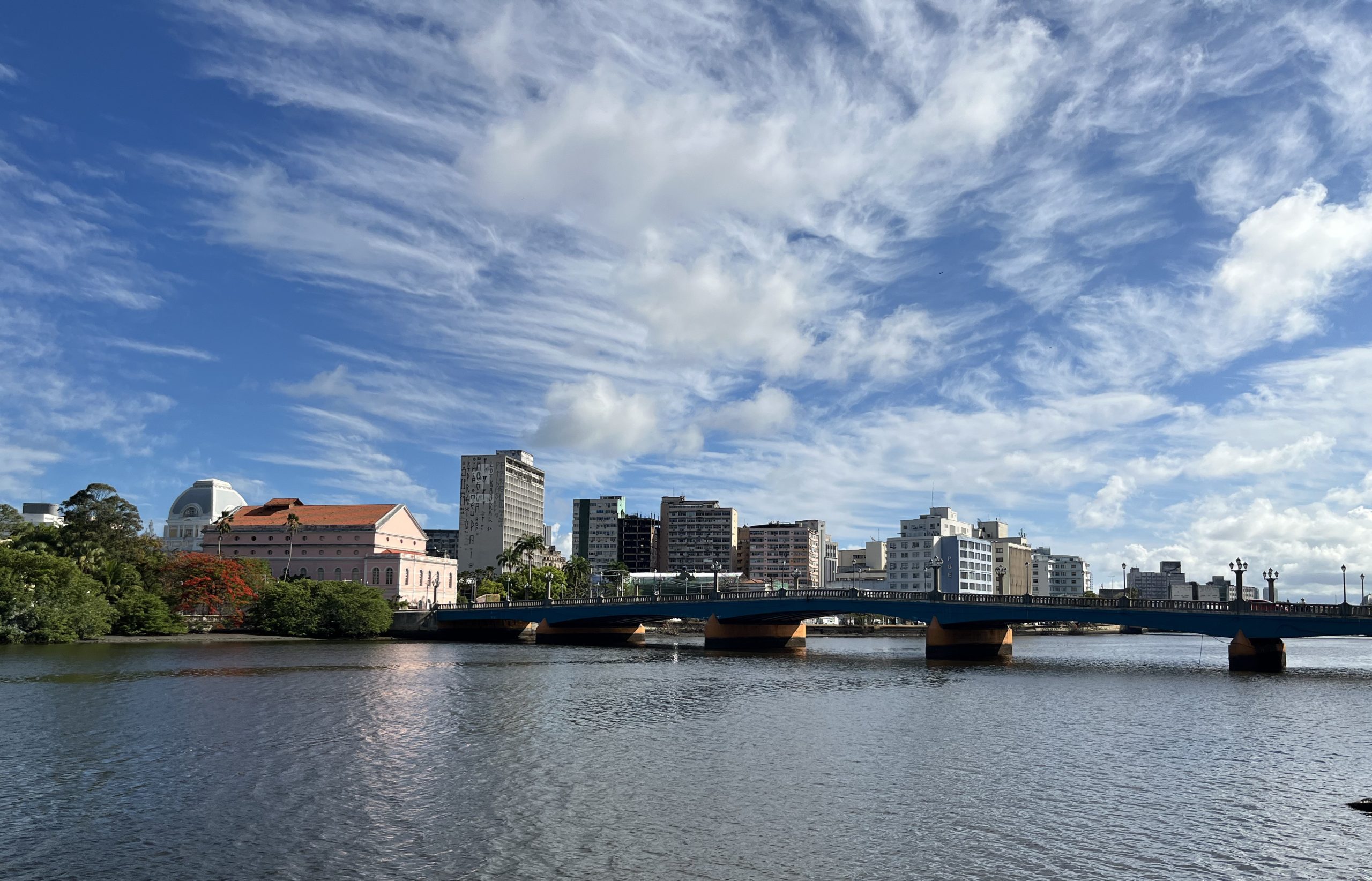
A Local-Logic Safety Guide for Foreigners
Recife is a city of bridges, beaches, music, and heat (the good kind). It’s vibrant, coastal, and full of personality. And for most visitors, the first practical question is the same: is Recife safe?
The short answer is yes. If you understand how the city works. Like most big Brazilian cities, Recife doesn’t reward improvisation. It rewards local logic: timing, movement, and knowing how people actually live their day-to-day lives.
This guide isn’t about fear or mere statistics; it’s much deeper than that. It’s about helping you understand the city the way locals do, and showing you how language, culture, and a few smart habits make all the difference.
So… Is Recife Safe for Tourists?
Recife can absolutely be safe for tourists. Most visitors who have a good experience aren’t “lucky.” They simply move with intention.
What often confuses foreigners is that Recife changes quickly depending on where you are, what time it is, and how you get there. Two streets can represent completely different places. Two hours can totally change the atmosphere. Compared to cities like Rio de Janeiro and São Paulo, Recife is relatively small. You can go from one extreme to another in a matter of minutes.
This is what we call the tourist bubble:
some people stay inside it without realizing it exists, while others accidentally step out of it without the tools to adapt.
What usually works best for visitors:
- Staying in areas with movement and structure
- Planning evenings instead of wandering late
- Using Uber or ride-hailing at night
- Asking locals simple, direct questions
How Locals Think About Safety in Recife
The core idea is simple:
busy places feel safer; empty places don’t.
Locals don’t usually talk about safety in abstract terms. They talk about context.

During the day, Recife is bustling with life: offices, buses, shops, beachgoers. After work, especially during the week, some areas quickly become quiet. This does not mean that there is “danger everywhere”; it means that your decisions are more important.
Locals adapt automatically:
- They plan where and how they will go before leaving.
- They always walk on main streets instead of alleys and deserted streets.
- They may avoid buses and the metro after dark.
A Simple Local Safety Mindset (Not Fear-Based)
A simple local safety mindset in Brazil isn’t fear-based or about staying constantly alert; it’s more about quietly adjusting your habits. Locals tend to know where they’re going and how they’ll get back, move with purpose, and use cafés, shops, and other busy places as natural pause points. They also usually avoid wandering late at night just to see what’s there. Overall, it’s a calm, practical approach that feels very Brazilian.
Where Tourists Usually Stay in Recife (And Why It Matters)
In Recife, areas that feel safer usually share the same traits: lighting, people around, services, and easy transport.
These are some neighborhoods that offer safety in Recife:
Boa Viagem

Boa Viagem is the most popular base for visitors, and for good reason. During the day, the neighborhood stays lively, with constant movement on the streets and that unmistakable beachfront energy along the promenade. It’s also one of the easiest places to stay, thanks to the high concentration of hotels and apartment rentals. On top of that, everyday essentials are always close by, with lots of restaurants, bakeries, and pharmacies within an easy walk.
During the day, it feels lively and easy. At night, it’s still fine — but locals plan transport instead of walking long distances.
Recife Antigo

Recife Antigo is beautiful and historic, especially during the day. Museums, cafés, architecture, photos — it’s a highlight.
At night, the experience depends heavily on events and crowds. When there’s movement, it’s great. When it’s empty, locals simply don’t hang around.
Olinda
Olinda is colorful, cultural, and full of personality, and it’s at its best when you treat it as a daytime adventure with a bit of structure. It helps to have your transport arranged in advance, so you can focus on wandering the historic streets without worrying about logistics. Going during the day makes the whole experience more comfortable and lively, and having a simple plan, even just a few stops you want to hit, helps you enjoy Olinda’s charm without getting turned around.

Think of it as a destination, not a place to wander aimlessly at night. At night, stick to the central streets. Outside of carnival season, Olinda is like any other neighborhood in the Recife metro area: everything is much quieter.
Neighborhoods People Often Google
In Recife and Olinda, the neighborhoods people most often end up Googling tend to be the ones that show up in hotel searches, beach photos, or day-trip guides.
The big names are usually Boa Viagem (the main beachfront base), Pina (next door, also coastal), and Recife Antigo (historic center, museums, waterfront, day visits). You’ll also see people searching more residential, “local-but-nice” areas like Graças, Espinheiro, Aflitos, Casa Forte, and Jaqueira (often because they feel calmer and greener, with cafés and good food). Other common “what’s it like there?” searches include Boa Vista, Derby, Ilha do Leite (more business/medical), and Madalena/Torre (central, mixed residential/commercial).
Around Olinda, visitors commonly search Centro Histórico (the colonial hills, churches, viewpoints), Carmo, and Varadouro (areas tied to the historic core). You’ll also see Bairro Novo and Rio Doce pop up, especially from people comparing where to stay versus where to visit. And because the metro area blends together, it’s also common to see searches for nearby beachfront areas in Jaboatão, like Piedade and Candeias.
Day vs Night in Recife (The Detail Visitors Often Miss)
One of the most useful things you’ll hear in Recife is something like: “Depois das seis fica vazio.” It’s not about danger in a dramatic sense, it’s about flow. After work hours, some areas simply lose their movement, especially on weekdays. A street that felt totally normal at 3 pm can feel noticeably empty later, with fewer people around, fewer open storefronts, and less of that “city noise” that makes you feel oriented.
That doesn’t mean you shouldn’t go out at night. It just means Recife rewards a little planning. If you decide where you’re going ahead of time and keep transport simple, night plans feel easy and relaxed instead of uncertain. Think of it like choosing comfort and convenience: you’re setting yourself up to enjoy the evening rather than figuring everything out on the fly.
Quick view (planning basics):
- Know where you’re going
- Know how you’re getting there
- Know how you’re getting back
Going Out at Night Without Stress
Locals usually keep nights smooth by choosing places that already have movement and a predictable vibe. They tend to stick to known nightlife zones, where there are more people on the street, more options in one area, and fewer “empty stretches” between places. They also decide transport before leaving, so the night stays focused on meeting friends, eating, and enjoying the city, not improvising routes or wandering around looking for the next spot.
In other words, the night is for enjoying, not improvising; a little structure makes Recife feel simple.
Quick view (how locals do it):
- Choose places with movement
- Prefer known nightlife areas
- Think about transport before leaving
The night is for enjoying — not improvising.
Uber Culture in Recife
In Recife, Uber isn’t something people use only when they get stuck. It’s woven into daily routines, and locals treat ride-hailing as the default once distances get longer or the city’s pace changes. It’s especially common at night, when some areas get quieter after business hours, and when you’re crossing between neighborhoods where the vibe can shift quickly.
Cost-wise, most everyday rides fall into a practical range. A short hop of around 10 minutes often lands roughly in the R$ 10–20 zone, while a more typical cross-neighborhood ride of 15–25 minutes is commonly around R$ 20–40. Later at night, during rain, or at peak demand, prices can jump noticeably due to dynamic pricing, which is one reason locals default to the simple advice: “Melhor ir de Uber.” (If you want a quick check before leaving, Uber itself recommends using its price estimator to preview the fare.)
As a point of reference for how the city prices car rides in general, Recife’s official taxi tariff is about R$ 1,95 per km during the day and R$ 2,35 per km late at night, before any other components and waiting time, which helps explain why longer trips add up and why people prefer door-to-door rides when it’s late.
A common piece of advice you’ll hear is:
“Melhor ir de Uber.”
“Better to go by Uber”
Beach + Water Safety in Recife
Safety in Recife isn’t only about streets. It’s also about the ocean.
Locals pay attention to:
- Flags
- Signs
- Lifeguard instructions
This is especially important along Boa Viagem, where conditions can change quickly. Enjoy the beach — but trust local systems more than assumptions.
Shark Attacks in Recife — And the Famous Warning Signs

Yes, Recife has shark warning signs. And no, they are not a joke. You will indeed see daring swimmers entering prohibited areas, but they are tempting fate.
They are a real and visible part of the coastline, and they exist because of past incidents. Locals simply adjust their behavior. You can visit the North Coast of Pernambuco, such as Itamaracá, or look for beaches on the South Coast, such as Porto de Galinhas.
The main point is not fear, it is respect. If you are going to enter the water at Recife’s beaches, the water should not exceed knee height. Also, prefer low tides, as recommended by researchers and authorities.
The shark has become a symbol of Recife. Memes, jokes, and ads are a fun way to stay alert to danger.
What Locals Actually Do
Locals don’t dramatize the issue. They just follow the guidance:
- Avoid swimming at dawn or dusk
- Be cautious in deeper, open water
- Respect posted signs and flagged areas
- Do not swim without others around you
Enjoying Boa Viagem Without Stress

For many people, Boa Viagem is about:
Swimming is only one part of the beach experience — and not the main one for many locals.
Recife vs Rio: Why People Compare Them
People compare Recife and Rio because they’re both big, beachy Brazilian cities that visitors “feel” they should rank on a single scale. The instinct makes sense, but the comparison usually doesn’t help much in practice.
One concrete reason the comparison often misleads is that “dangerous” can mean different things. If you look only at lethal violence indicators, Recife can come out looking harsher on paper in some recent snapshots. For example, Jornal do Commercio reported Recife closing 2025 with 36.01 deaths from “mortes violentas intencionais” per 100,000 inhabitants (and notes this was above the state average). Meanwhile, a national media summary citing the Brazilian Public Security Yearbook put the city of Rio at 20.4 MVI per 100,000 (ranking mid-pack among capitals in that framing). That doesn’t mean “Recife is more dangerous than Rio” in a practical, traveler sense; it means the mix of problems can be different, and you need to adapt to the local pattern rather than the national stereotype.
What matters more is how each city works: the layout, the rhythm, and how people move around. In Recife, the big detail many visitors miss is that some areas can feel busy in the afternoon and noticeably quieter after work hours, especially on weekdays. In Rio, the scale is bigger and the distances between plans can be longer. In both places, the winning formula is the same: go at the right time, move with intention, and use simple transport choices (often Uber at night) to keep the day or evening smooth.
Timing, transport, and awareness matter everywhere.
Learning Portuguese in Recife Makes Everything Easier

You don’t need perfect Portuguese. You don’t need to “stop being a gringo.”
But speaking better Portuguese helps you:
- Ask clearer questions
- Understand timing warnings
- Get more honest local advice
- Avoid looking lost
That’s why learning Portuguese in Recife, through immersion or regular classes, isn’t just about language. It’s about confidence.
At Rio & Learn Recife, students practice Portuguese in real situations: asking for advice, ordering, getting around, and understanding how locals actually communicate.
Portuguese in Action: Asking a Police Officer for Recife Safety Advice
Imagine this situation: a student has just arrived in Recife and wants to go out later. She decides to ask a police officer for advice instead of guessing.
Dialogue (with context and translation):

Student:
Oi, com licença. Eu sou estrangeira e gostaria de saber se esta área de Recife é tranquila.
Hi, excuse me. I’m a foreigner, and I’d like to know if this area of Recife is safe.
Police Officer:
Durante o dia é tranquila, sim.
It’s calm during the day, yes.
Student:
E à noite? Dá pra andar a pé?
And at night? Is it okay to walk?
Police Officer:
À noite é melhor ir de Uber.
At night it’s better to take an Uber.
Student:
Entendi. Até que horas fica movimentado aqui?
I see. Until what time is it busy around here?
Police Officer:
Depois das seis fica mais vazio.
After six o’clock it gets emptier.
Student:
Obrigada pela dica!
Thanks for the tip!
Police Officer:
De nada. Aproveita, mas com cuidado.
You’re welcome. Enjoy it, but be careful.
These phrases aren’t dramatic — they’re useful. Understanding them helps you move like someone who belongs.
Smart Habits That Keep Recife Fun
Most people who end up loving Recife tend to share a few simple habits: they travel light, plan their evenings in advance, and move with intention instead of wandering aimlessly. They also ask locals for quick guidance, because a two-minute tip about timing or the easiest route can make everything feel smoother.
It’s not about being paranoid. It’s about being present.
Final Thoughts: Recife Is Safer When You Read the City
Recife is warm, musical, coastal, and full of life. It rewards people who slow down, ask questions, and learn how the city breathes.
When you understand timing, movement, language, and local logic, Recife doesn’t feel intimidating — it feels human.
Learn a few phrases. Plan your routes. Trust local advice.
And let Recife show you its rhythm.
Click on the links below to see more related Dicas
Brazilian Northeast
1817 Pernambuco revolution
Frevo
Is Rio Safe?
Berita Terkini
Berita Terbaru
Daftar Terbaru
News
Jasa Impor China
Berita Terbaru
Flash News
RuangJP
Pemilu
Berita Terkini
Prediksi Bola
Technology
Otomotif
Berita Terbaru
Teknologi
Berita terkini
Berita Pemilu
Berita Teknologi
Hiburan
master Slote
Berita Terkini
Pendidikan
Resep
Jasa Backlink
Slot gacor terpercaya
Anime Batch